.svg)

Let’s face it — sales prospecting isn’t quite the easy task. Without a clear plan on how to attract qualified leads, salespeople will always find it challenging to have a steady stream of new leads in their sales pipeline.
So, how can they avoid this issue? In this detailed guide, we took a holistic approach to discuss the concept of sales prospecting. Here, you will find what sales prospecting means, its types, some effective strategies, and tips to ensure your prospecting efforts are a success. Let’s get started.
What is Prospecting in Sales?
Sales prospecting is the process of identifying and contacting potential customers who show interest in your products or services. It’s the first step in the sales process in which sales professionals start to build relationships and generate revenue for the business.
Sales prospecting often takes place via a one-on-one approach with your prospect and aims to position your business’s offerings as solutions to their problems. For instance, a sales development representative (SDR) can send cold emails to a prospect that fits their ideal customer profile (ICP) with the aim of converting them.
Why is Strategic Sales Prospecting so Important?
A strong sales prospecting strategy offers businesses a steady flow of opportunities to grow their business. Here are some top reasons why sales prospecting is essential:
- Creates a Strong Sales Pipeline
Prospecting helps you identify your potential buyers, ensuring a consistent flow of leads into your sales pipeline. This robust pipeline serves as an avenue for continuous revenue generation.
- Improves Conversions
Strategic prospecting involves identifying qualified leads who are more likely to become your customers. This targeted approach helps you to focus on the right leads, and nurture the relationship with them to drive conversions.
- Increases Revenue Growth
Every potential customer represents an ideal buyer who can purchase your products or services. Strategic prospecting ensures you engage with the right prospects, increasing sales and generating revenue for the business.
- Better Customer Relationship
Strategic prospecting allows you to better understand your customer’s needs. This encourages you to build a meaningful and stronger relationship that involves trust.
- Drives Efficiency
Strategic prospecting provides actionable data and insights that enable you to weed out unqualified leads. This allows sales teams to tailor their efforts to the most promising opportunities, increasing their productivity.
What’s the Difference between Sales Prospecting and Lead Generation?
Although sales prospecting and lead generation are closely related, they are different. Their approaches, outcomes, and the personnel behind each field differ. While sales professionals often handle sales prospecting, marketing teams handle lead generation. But how are they different?
Sales prospecting is the process of directly seeking, engaging, and qualifying potential customers to convert them into paying customers. It involves a one-on-one and personalized interaction to build relationships and generate immediate opportunities. The timeframe for this approach is short and involves moving leads down the sales funnel. Some common methods of achieving this are cold calling, cold emailing, and networking.
On the other hand, lead generation is the process of attracting potential customer’s interest in a product or service to create a pool of potential buyers. It involves a one-to-many and generalized approach to attract leads and pass them to the sales teams for qualification. The timeframe for this approach is long, often taking many months or years to become a success. Common methods of achieving this include content marketing, social media campaigns, SEO, and webinars.
What Are the Different Types of Sales Prospecting?
B2B sales prospecting is of two types:
Inbound Prospecting
Inbound prospecting involves using valuable and engaging content to attract potential customers to your brand. The content must be educational, entertaining, or inspirational. Marketing teams implement this approach via methods like content marketing, SEO, or social media. They create content that aligns with the prospect’s intent, catch their attention with this helpful content, and nurture them till they are ready to buy your products or services.
Outbound Prospecting
In outbound prospecting, the salesperson makes the first move. They find prospects that align with their ICP and contact them via methods like cold emailing, cold calling, text messages, or online ads. Then, they send personalized sales messages that focus on the prospect’s needs with the aim of building trust and closing deals.
What Are the Methods of Sales Prospecting for SDRs?
SDRs can utilize different methods to identify and connect with potential customers. Here are some key methods for successful sales prospecting:
1. Cold Emailing
Cold emailing involves sending unsolicited, personalized messages that highlight your value proposition to potential customers. It contains key information that generates interest and lays the foundation for further sales conversation. Cold emails often include a catchy subject line, easy-to-read paragraphs, and a strong CTA to increase the open rates.
2. Cold Calling
This involves directly calling your potential customers to introduce the company and offer your solutions. It requires resilience and strong communication skills, backed by a carefully crafted script that focuses on your prospect’s pain points and needs to capture their attention. Although cold calling can set the pace for further sales conversation, it has a high rejection rate. Salespeople may frequently get “no” as an answer to their pitches, as only 1-2% of cold calls get an appointment.
3. Social Selling
Social selling involves building and nurturing professional relationships with target accounts via social media platforms like LinkedIn and Twitter. You provide helpful content that resonates with your potential prospects and presents you as an expert in your industry. As time passes by, this approach becomes a natural point of contact for prospects, earning their trust and increasing their likelihood of buying from you.
4. Industry Events
Industry groups and networking events like conferences, meetups, exhibitions, and other gatherings pave the way to network and build relationships with prospective buyers. Sales teams often share contact details instantly during these interactions using digital business cards such as Business Card by Uniqode. Attending these events enables you to see your prospects face-to-face, allowing you to interact with them and connect on a deeper level. You listen to their issues, identify their pain points, and offer suggestions that can solve them. If done right, this approach creates trust and increases the chance of conversion.
5. Referrals
This involves leveraging existing relationships or satisfied customers to obtain new leads for your business. You ask them to connect you with new customers who have similar problems that your products or service can solve. This approach has a higher conversion potential due to the recommendation from a trusted network.
How to Craft an Effective Sales Prospecting Plan?
A solid sales prospecting plan allows you to have a steady flow of new leads in your sales pipeline. In this section, we look at some effective B2B sales prospecting strategies that can reinforce your plan and help you achieve sales success.
1. Define Your Ideal Customer Profile (ICP)
Many salespeople don’t create a profile of their ideal target audience which could prevent them from targeting the right people. But with an ICP, you can know who exactly you should be pitching to. It helps you to identify and reach the people who are most likely to buy your products.
So, how do you create an ICP?
It’s simple. Look at factors such as location, budget, industry, and company size to determine whether they would be a right fit for your business. Once you have these details, you will be able to focus on the most promising leads, saving time, resources, and money. A targeted ICP means better-qualified leads and more conversions.
2. Understand the Company’s Internal Structure
This is a prominent sales tactic that works in enterprise selling but also works for SMBs. When you understand the company’s internal structure, you can reach out to a diverse set of people, increasing the chances of conversion.
To do this, talk to the juniors and middle management as they could help you better understand the company’s pain points. Then, scale through the ladder and use what you learned to craft a well-tailored pitch that resonates with the decision-makers.
3. Define Your Goals Before Reaching Out
Every prospecting process must begin with a clear and defined goal. While every goal doesn’t always have to impact revenue growth, it should gauge your prospect’s level of interest in your solution. It can be as little as booking meetings or closing a deal.
For instance, if you’re reaching a new prospect, you can start by building a relationship with them. Then, you can nurture them along the sales funnel to earn trust and credibility.
4. Build a Targeted List
Based on your ICP, organize your research into a list of high-value prospects. Segment your leads to prioritize your efforts and ensure a personalized outreach. You can consider these factors in building your targeted list:
- Decision-makers: Who are the decision-makers? What are their company, job titles, industries, company size, and other demographic details?
- Prospecting Goals: Do you intend to set an appointment, schedule a sales demo, or close deals?
- Channel: Where do you want to reach your prospects? Is it via email, phone calls, social media platforms, or text messages?
- Finances: What’s their budget?
- Season: Are they seasonal customers or not?
5. Focus on the Prospect’s Problem
Many salespeople don’t understand their prospect’s needs and goals. They focus more on their products or services rather than the prospect’s problem. A Salesforce report shows that 59% say most sales reps don’t take the time to understand their prospects.
However, focusing on your prospect’s problems and needs allows you to understand and connect with them. Tal Baker-Phillips, Sales Leader at Lemlist opines that “product-solution alignment directly shows you are listening and aims to solve their specific problems.” In other words, it shows you acknowledge their issues rather than only selling to them.
Besides, Cesar Sarapka, Head of Sales at DragApp also says that “it's always important to stay close to the client, understand their needs, and show how our product can solve those problems. That's what we do, we keep the communication door open and talk with the client during the whole process. When it's clear that our solution solves their current issues, we advise the purchase, or they realize by themselves after using the trial and actually understanding that the tool is great for their needs.”
6. Leverage Intent Signals
When a prospect shows an interest in your product or service, there is a huge chance they’re already considering your brand as an option. Whether it’s website visits, hiring intent, fundraising news, or technographic signals, identifying these signals can make your prospecting efforts easy.
Harry Mason, Senior GTM Engineer at ColdIQ threw some insights into how he uses intent signals to enhance his prospecting efforts. He says, “We source sales triggers on people through a variety of different data sources, and we use AI to compile all the information about a prospect and personalize our outreach. For instance, we use Clay to do automatic prospect research on prospects before exploration and sales calls, saving our sales team a ton of time.”
7. Initiate Contact with Personalized Messages
How you craft your sales pitch matters. Whether you pick up the phone, send a cold email, or message them on LinkedIn, you need to tailor your messages to each prospect accordingly.
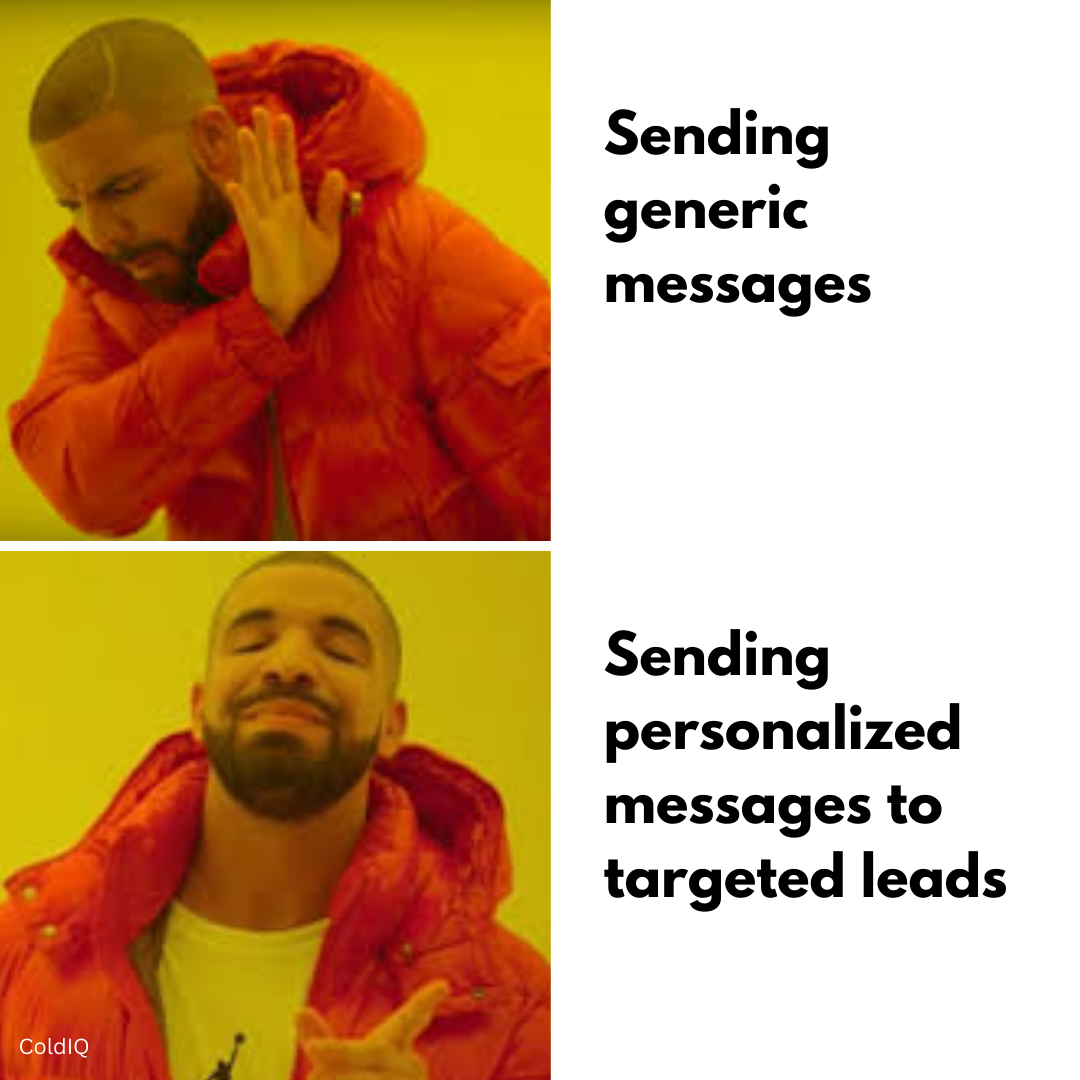
A personalized message often addresses your prospect’s specific challenges and highlights solutions to forge personal relationships that fuel loyalty and drive conversion. Ensure you use clear and concise language to communicate your values and create a lasting impact.
8. Follow Up on Prospects
Not every perfect pitch will lead to outright sales for a few reasons. First, your prospects may not be ready to buy yet. Or they may need a little conviction on how your products can benefit them.
According to HubSpot’s Sales Strategy Report, the number of interactions it takes to make a sale is growing. On average, it could take up to eight touchpoints to close a deal. Touchpoints can start from the initial contact up to the point of conversion. The time it takes for each prospect to commit varies.
After the initial conversation, salespeople should give their target prospects ample time to consider their offer. Then, reach out to them after a few days or weeks. This break clears their mind and prepares them when they are ready to talk and make a purchase.
9. Evaluate the Performance
Evaluating performance helps you understand what makes your prospects convert. It tells you about your most effective strategy, which you can focus on. It also identifies areas of improvement that you can refine to improve your sales process. These insights enable you to make informed decisions that will boost your sales efforts.
Top Tips for Better Sales Prospecting
Outbound sales prospecting can become challenging even after you execute the best strategies. However, implementing some best practices can help to make these strategies more effective. In this section, we will discuss some tips to enhance your sales prospecting process:
1. Update Your ICP Periodically
Your ICP lays the foundation for finding your ideal buyers. Revisiting it when due helps you to stay on course and target the right prospects. For instance, if your business objectives have shifted or your competitors are shifting the market, you need to refresh your ICP.
But how do you do this?
Review your customer data regularly. Dive into your CRM to gain insights into the characteristics of your best and worst customers. Look at metrics such as conversion rate, churn, revenue, lifetime value, and retention rate to refine your ICP.
You can also collect feedback through surveys, testimonials, reviews, or other relevant sources. This approach informs you about your customer’s challenges and helps you identify proactive solutions that can work.
On top of this, analyze market trends, especially your competitors’ landscape, for innovations and disruptions. Look at their products, prices, features, reviews, or sales tactics to gain industry insights and have a competitive advantage. Use the insights to refine your ICP and position your brand appropriately.
2. Build Relationships with Your Prospects
Shoving your products down your customer’s throat won’t work. You need to build relationships with your prospects if you want them to respond. It’s all about establishing trust and credibility to gain loyal customers.
To do this, understand their needs, motivations, and decision-making processes. Gain insights into their perspectives and offer a tailored approach to address their challenges or questions. These tactics improve customer interactions and forge stronger connections with your potential clients.
3. Know When to Stop Pursuing Prospects
Not everyone you target will be a good fit for your business. This may be a hard pill to swallow but it’s worth considering.
The goal is to focus on the most promising ones. As a result, if you notice that a prospect doesn’t align with your ICP or isn’t interested in the deal, you don’t have to pursue them.
4. Use a Prospecting Tool
The sales world moves fast, and new technologies come up all the time. Leveraging them to your advantage can make prospecting easier and keep you competitive. AI sales tools, for instance, can help you find and target qualified leads that can boost your sales efforts.
You can also use sales engagement tools to personalize your messages and send them at scale to your audience. In short, embrace new prospecting tools to boost productivity and automate your sales process.
Related: Clay vs Persana: Which B2B Sales Prospecting Tool Should You Use?
Top Tools to Support Your Sales Prospecting
Still speaking on tools, here are the top 5 B2B prospecting tools that can support and boost your sales prospecting efforts.
1. Lemlist
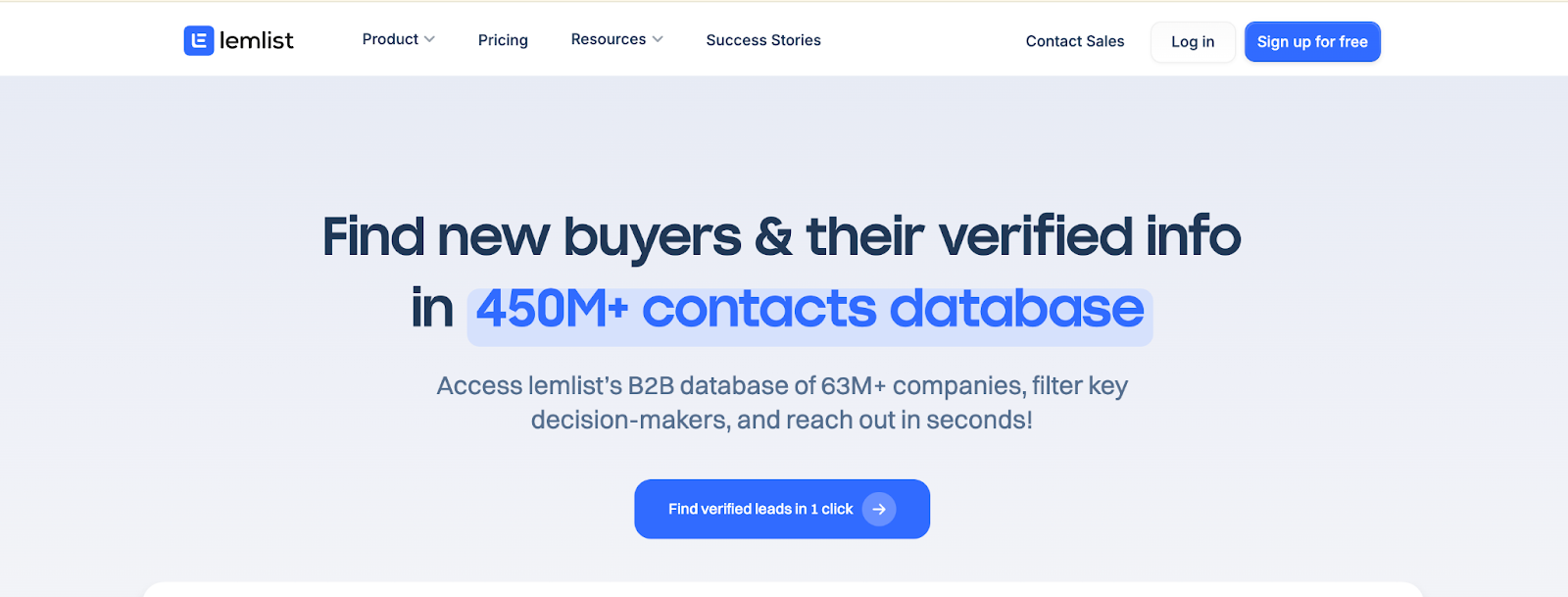
Best for: Data and Lead Generation
Lemlist is one of the best sales prospecting tools in the market. With its over 450 million contact database, you can find your ideal buyers and retrieve their valid contact details. The lead generation platform also allows you to filter key decision-makers from the search results, paving the way for a targeted outreach. It integrates with third-party platforms.
Key Features and Benefits
- An extensive lead database that allows users to find their ideal buyers.
- An email and phone number finder and verifier that retrieves valid contact information.
- Native integrations that streamline the sales workflow and boost productivity.
Pricing
Lemlist’s pricing starts at $69 per month.
2. LinkedIn Sales Navigator
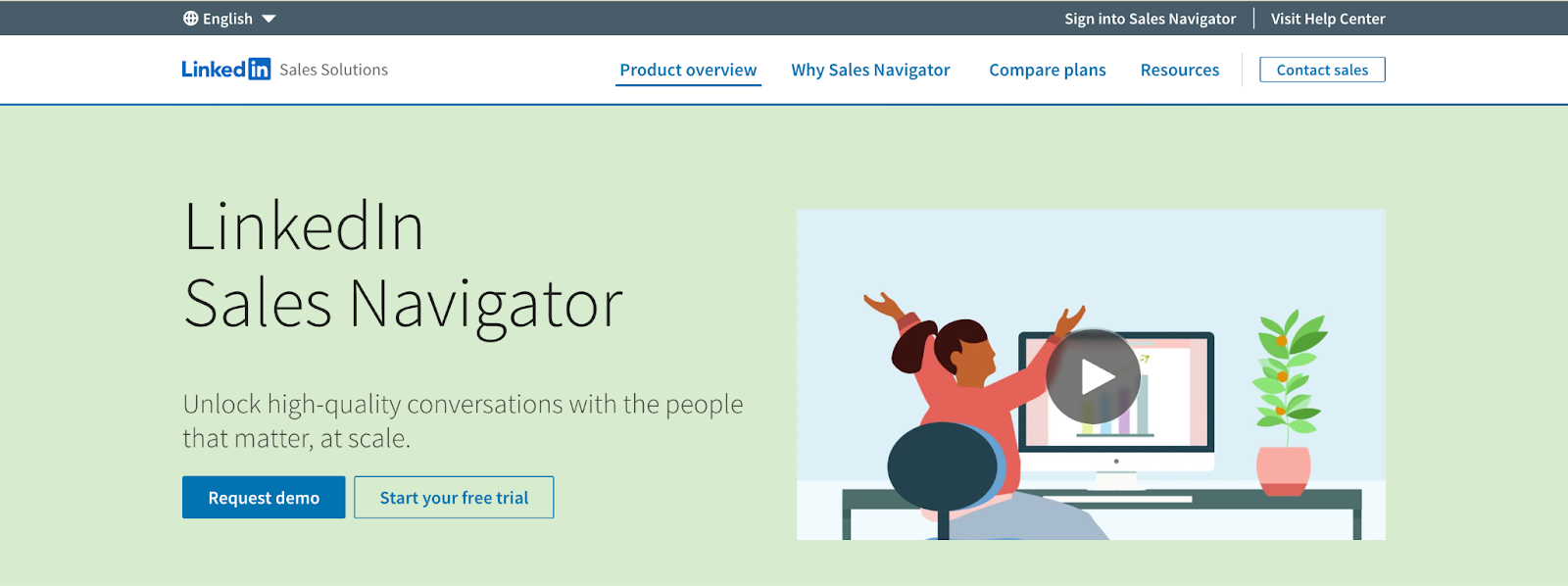
Best for: Lead Generation
LinkedIn Sales Navigator is another sales prospecting tool that provides valuable data to find ideal buyers for your business. With over 1 billion professionals and 64 million businesses, you can identify, engage, and convert a target customer. Its advanced lead search capabilities and engagement features make it easy to uncover and engage decision-makers relevant to your business.
Key Features and Benefits
- An advanced lead and company search capabilities to generate leads relevant to your business.
- Engagement features that allow you to reach and build meaningful relationships with your prospects.
Pricing
LinkedIn Sales Navigator’s pricing plan starts at $99.99 per month.
Related: Top 9 LinkedIn Prospecting Tools
3. Ocean
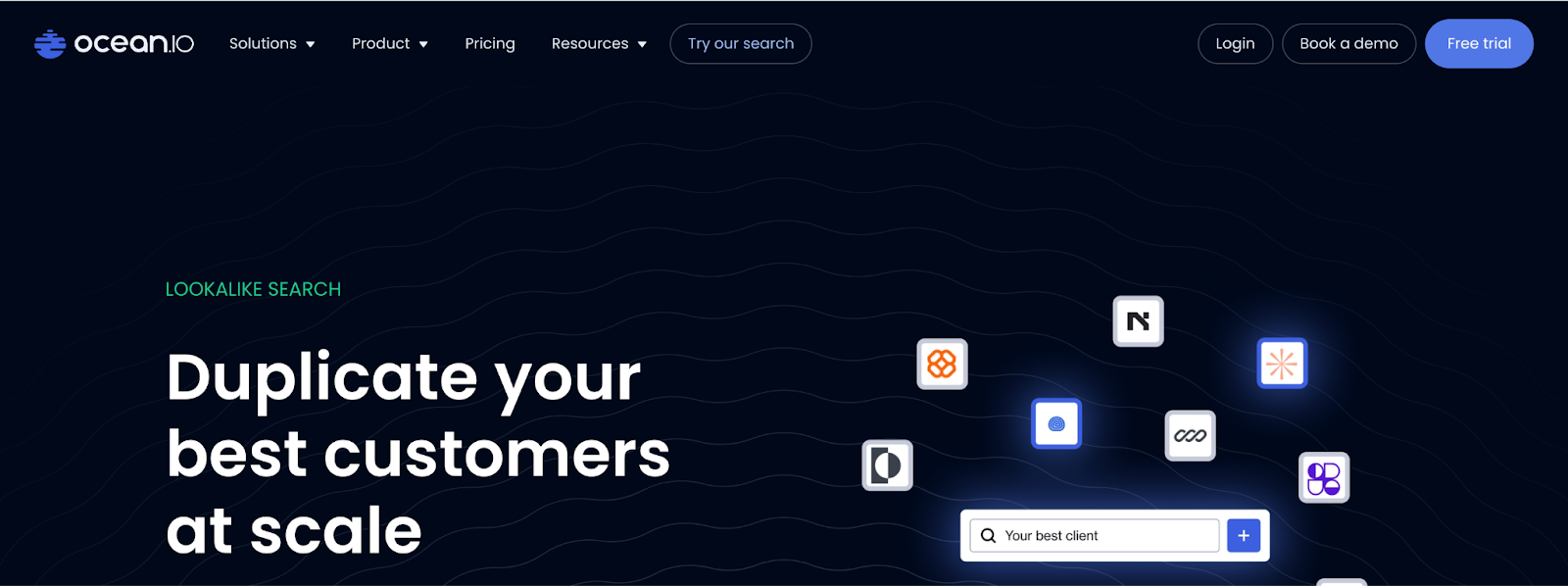
Best for: Lookalike Search
Ocean finds prospects similar to your target audience. With its AI-driven lookalike search feature, you can find similar companies that match your ICP and replicate existing happy customers. The platform also retrieves your prospect’s valid contact information to help you reach them effectively.
Key Features and Benefits
- An AI people search feature that finds target individuals who fit your ICP.
- An AI company search feature that discovers target accounts that are relevant to your business.
- A Chrome Extension that integrates with your browser to enhance your prospecting efforts.
Pricing
Ocean offers a 14-day free plan. Its paid plans start from $79 per month with limited credits.
4. Unify
Best for: Intent signals and lead generation
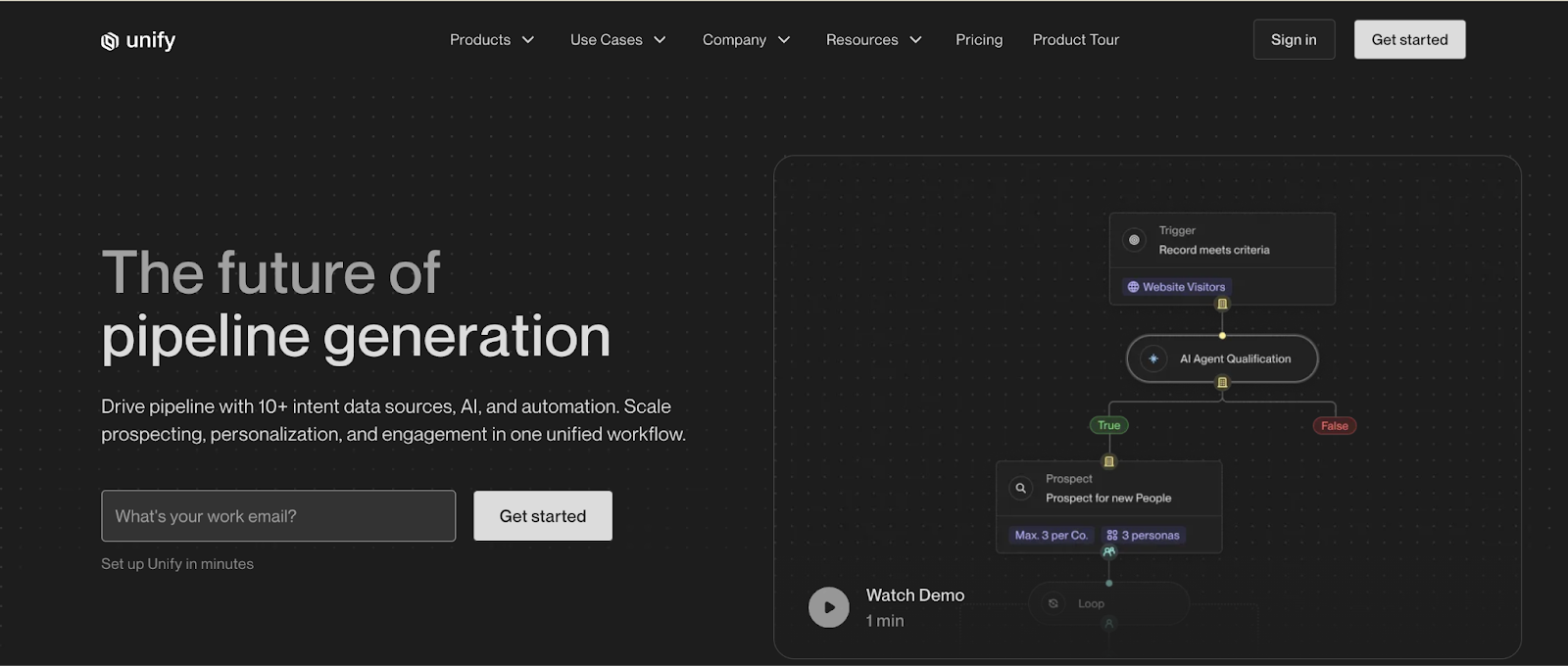
Next on the list is Unify. This sales prospecting tool leverages over 10 intent signals to uncover your ideal buyers. It provides person and company-level signals which opens doors to new sales opportunities that could drive conversions for your business. It integrates with third-party platforms.
Key Features and Benefits
- A signals feature that provides sales triggers to identify qualified leads for your business.
- An AI agent to research your prospects and personalize messages at scale.
- Integrations with third-party platforms to enhance your sales workflow.
Pricing
Unify’s Growth plan starts at $1,000 per month.
5. Apollo
Best for: Lead Generation and Sales Engagement
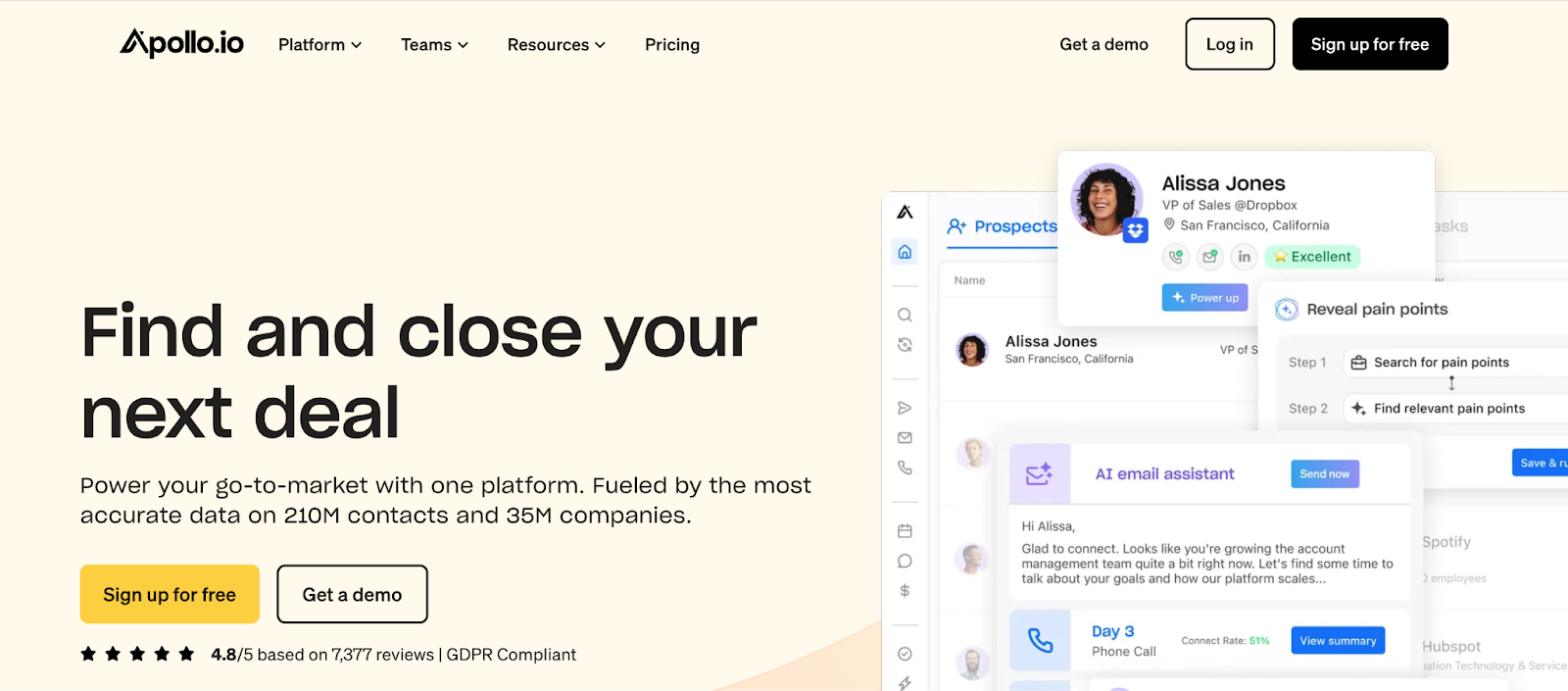
Apollo is an all-in-one prospecting tool to identify, interact, and convert your potential customers. Its vast database of over 210 million contacts and 35 million companies connects you to the most relevant leads suitable for your business. Besides, you can leverage its sales engagement feature to interact with your prospects effectively. It integrates with third-party platforms to improve your sales processes.
Key Features and Benefits
- A vast database that allows you to find your ideal buyers.
- An engagement feature that enables you to interact with your ideal buyers effectively.
- Integrations with third-party tools like CRMs, email outreach tools, data and analytics platforms, video conferencing platforms, and more.
Pricing
Apollo offers a free trial but you can subscribe to its paid plans that start at $49 per month.
6. Sendspark
Best for: Video Prospecting
Our final option on the list is Sendspark. The video sales prospecting platform enables you to create and share videos that sell to your ideal buyers. With a few clicks, you can create personalized and engaging videos tailored to each prospect to drive engagement and conversion. It integrates with third-party platforms.
Key Features and Benefits
- A video recorder to capture your moments and engage your viewers.
- Personalization options that create tailored video campaigns with their names and custom website backgrounds.
- It integrates with third-party platforms like Apollo, Instantly, Outreach, and more.
Pricing
Sendspark's pricing starts at $49 per month
How to Measure Sales Prospecting Success
Measuring the performance of sales prospecting is necessary for refining and improving your approaches and strategies. With key metrics, you can figure out what’s working, identify areas that need improvement, and optimize sales processes to achieve positive results. Here are some key metrics you can measure:
1. Activity Metrics
Activity metrics measure the level of consistency in your prospecting activities. It tracks:
- The number of calls made
- The volume of emails sent
- Follow-up attempts
- LinkedIn messages sent
You can use them when your response rate is low. Adjust your targeting strategies or messaging to improve engagement.
2. Pipeline Growth
Pipeline growth evaluates the flow of leads in your sales pipeline. It tracks:
- Number of high-quality prospects
- Average deal size
- Pipeline coverage ratio
- Sales cycle length.
You can use this metric to monitor your pipeline. Focus on the number of new opportunities added as a result of your prospecting efforts.
3. Conversion Metrics
Conversion metrics show how your outreach efforts ended up in opportunities and deals. It tracks:
- Response rate
- Booked meetings
- Lead-to-opportunity conversion rate
- Opportunity-to-deal conversion rate.
You can use these metrics to identify what’s not working and refine your strategies.
How ColdIQ Can Enhance Your Sales Prospecting
Effective sales prospecting is essential to finding high-quality leads to fuel your sales pipeline and ultimately drive revenue growth. You can do this efficiently with cold email agencies like ColdIQ.
ColdIQ is the best sales prospecting agency that can take your prospecting game to the next level. With its highly experienced sales professionals and outstanding processes, we can find high-value target accounts that fit your ICP and transform them into quality leads to boost your sales efforts. We recognize valuable sales opportunities and maximize their potential to drive revenue growth for your business. Get in touch with us today!